Door categorieën bladeren
Ontdekken
Fiverr Pro
Nederlands
$
USD

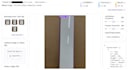
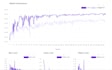
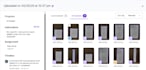
High-performance Computer Vision solutions for Industry 4.0. > I combine Industrial Engineering expertise with Roboflow to build custom AI models for object detection, quality control, and automated inspection. Whether you need precise dataset labeling, YOLO model training, or a full integration with Power BI for real-time analytics, I deliver Lean-optimized solutions.
Transform your production floor with AI-driven precision. Lets automate your visual inspection today!
Industrial Engineer, Lean Six Sigma, Data Science, AI Automation Specialist
Talen
What do I need to provide to get started?
To begin, I need a clear description of what you want to detect or monitor. If you already have images or videos, you can provide them. If not, I can guide you on how to collect the right data for Roboflow.
Can you train a model if I don’t have annotated images?
Yes! I can handle the entire annotation (labeling) process in Roboflow using bounding boxes or polygons. If you have raw data, I will organize, tag, and augment it to ensure the model achieves high accuracy and precision.
Which AI models do you use for detection?
I primarily work with YOLO (v8 through v11) for object detection and instance segmentation due to their high speed and accuracy in industrial environments. However, I can adapt the architecture based on your specific needs, whether for cloud deployment or edge devices like NVIDIA Jetson.
Can the vision model be integrated with my existing dashboards?
Absolutely. Being an Industrial Engineer, I specialize in connecting AI results with business metrics. I can export detection data to Power BI or RStudio to create real-time KPIs, allowing you to track production quality and efficiency (OEE) automatically.
Will the model work in low-light or harsh factory conditions?
During the preprocessing phase in Roboflow, I apply advanced "Augmentation" techniques (adjusting brightness, noise, and blur). This ensures the model is robust enough to maintain high performance even in challenging industrial environments with varying light or dust.


