Door categorieën bladeren
Ontdekken
Fiverr Pro
Nederlands
$
USD


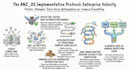
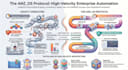


Stop bleeding corporate capital on manual entries and fragmented data streams. Siloed applications and unvalidated data models cause severe operational friction. As a MarTech Architect, I engineer high-performance, zero-error automation pipelines connecting your Odoo ERP system to external web APIs and cloud data layers using secure Python middleware.
I bypass manual GUI overhead entirely by building headless programmatic bridges via Odoos native XML-RPC and REST web service endpoints.
️ OPERATIONAL ARCHITECTURE FOCUS:
* Odoo ERP Integration: Unifying CRM pipelines, double-entry stock ledgers, and billing structures.
* Python Automation Script: Multi-app data sync layouts using async connection loops.
* ERP Database Cleaning: Systematic record deduplication, case normalization, and field validation.
* Automated Workflow Design: Eliminating human dependencies via server-side cron triggers.
I format messy supplier invoices, purchase orders, and spreadsheets into pristine relational structures that validate flawlessly without database truncation or import crashes.
Scale is a mathematical certainty. Stop guessing. Let the machine execute clean pipelines.
Programmatic Catalog Sync, Odoo ERP and Omnichannel Engineering
Talen
What parameters do you require to initialize the system handshake?
To initiate the pipeline, I require your Odoo instance database URL prefix, company database name string, and a securely generated API access key from your user settings profile interface. Do not share your primary account password credentials.
Can you sync Odoo SaaS Online or do you only support self-hosted instances?
I support both architectures natively. Odoo Online (SaaS) is synchronized externally via secure multi-tenant XML-RPC web connection objects, while self-hosted or Docker-containerized installations are integrated directly via raw database sockets or custom modules.
How do you safeguard my relational database from import validation crashes?
Every data asset is processed through an isolated local Python validation script loop on my workstation before live system migration. This step checks your data models for field constraints, sanitizes character typography, and removes structural duplicates to guarantee zero system downtime.
What is your protocol if an external API webhook endpoint drops offline?
My custom automation scripts do not just perform tasks; they are explicitly engineered for error-resiliency. I implement Try/Catch code structures with exponential back-off retries and integrate error-logging webhooks to instantly notify your monitoring channel if a link breaks.