Door categorieën bladeren
Ontdekken
Fiverr Pro
Nederlands
$
USD


Are people reaching your website or product but dropping off somewhere along the way?
Maybe youre seeing:
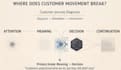
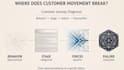
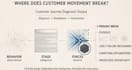
Ill analyze your customer journey to identify where customer movement breaks, what may be causing the breakdown, and what should be investigated or tested first.
I dont treat every problem as a generic conversion or UX issue.
I examine the actual journey and the available evidence to distinguish between problems such as:
You'll recieve:
The goal is not to give you 30 random optimization ideas. It is to answer: where is customer movement breaking, why does it appear to be happening, and what should you investigate or test next?
This is a diagnostic service, not a guarantee of increased conversion or retention.
Azrol Systems
Talen
Do I need analytics to order?
Analytics are strongly helpful, but not always required. I can work with other evidence such as screenshots, recordings, customer feedback, copy, product information, or funnel data. The strength of the diagnosis depends on the quality of the available evidence.
Will you redesign my website or funnel?
No. This Gig is focused on diagnosis. I identify where customer movement appears to break, why it may be happening, and what should be investigated or tested next.
Will you guarantee higher conversion or retention?
No. A diagnosis can identify a likely problem and a stronger intervention to test, but the outcome must ultimately be established through reality.
What if there are several problems?
I will distinguish the primary break point from contributing issues and competing explanations rather than producing an undifferentiated list of problems.
Can you tell me exactly what to change?
Where the evidence supports a specific intervention, I will recommend it. Where the evidence is insufficient, I will say so rather than pretending to know with certainty.


