Door categorieën bladeren
Ontdekken
Fiverr Pro
Nederlands
$
USD


Stop paying the "Python Tax." Get near-hardware data ingestion speeds.
Most data pipelines are plagued by what I call the "Object Tax"the massive overhead of memory allocation and single-core bottlenecks found in standard Python/Pandas scripts. If your ingestion scripts are crawling, hitting "Out of Memory" walls, or driving up your cloud bill, you are paying for compute you aren't actually using.
I replace your bottlenecks with high-performance C-engines built for the metal.
The Benchmark (The Proof)
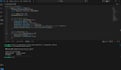
On my consumer-grade hardware (Nitro 16 / Ryzen 7), my custom engine (Axiom Turbo) achieved:
️ What I Offer
My Technical Stack
Quantitative and Algorithmic Systems
Talen
Why should I choose a custom C engine over standard tools like Pandas or Polars?
While Pandas and Polars are excellent for general analysis, they often incur a high memory "Object Tax." My C-based approach uses zero-copy memory mapping and SIMD instructions to achieve near-hardware speeds (3.06 GB/s) with a fraction of the RAM. It is built specifically for high-volume production
Can I integrate this C engine with my existing Python/Airflow pipeline?
Absolutely. I can package the engine as a high-performance CLI tool or a shared library that your existing Python scripts can call. You keep your current workflow but replace the slow "ingestion" part with the C-engine.
